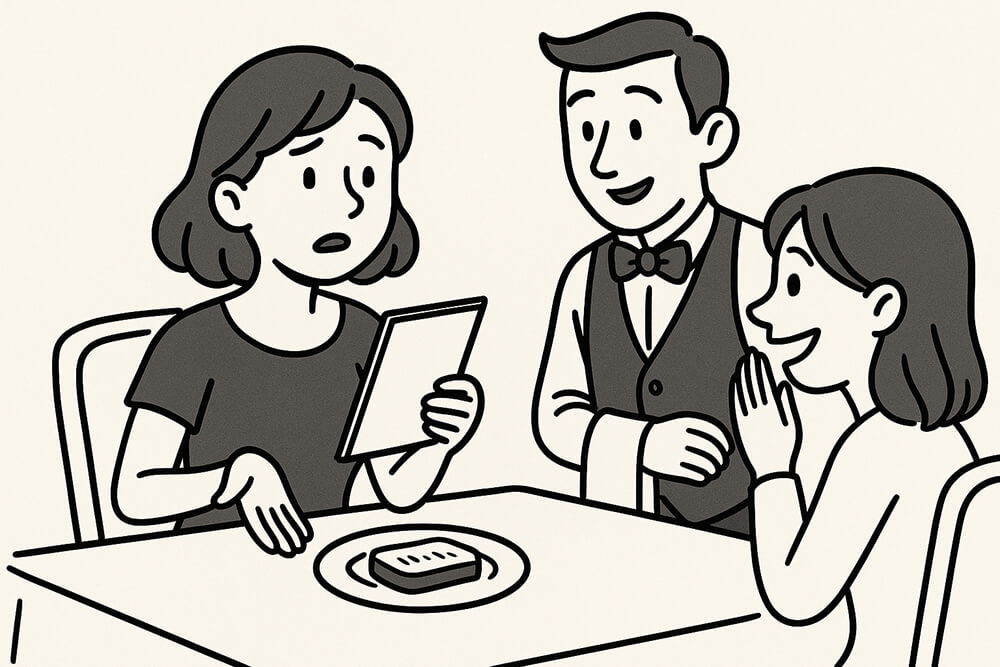
Emma went to a fancy restaurant for the first time.
The waiter gave her a long menu with many French words she didn’t understand.
Trying to look confident, she pointed at one item and said, “I’ll have this, please.”
When the food arrived, she was surprised to see only a small plate with one piece of bread.
Emma looked at the waiter and asked, “Is this the appetizer?”
The waiter smiled politely and replied, “No, madam, that is the main dish.”
Emma didn’t know what to say.
Her friend sitting across from her whispered, “You just ordered the cheapest thing on the menu. It’s called pain grillé… it means toast.”
Emma blushed and laughed.
She said, “Well, at least I can’t mess up breakfast tomorrow—I already practiced!”
エマは初めて高級レストランに行きました。
ウェイターが長いメニューを持ってきましたが、フランス語が多く書かれていて意味がわかりません。
自信ありげに彼女は一つを指さして言いました。「これをお願いします。」
料理が運ばれてくると、小さなお皿にパンが一切れだけ。
エマは驚いてウェイターに聞きました。「これは前菜ですか?」
ウェイターはにこやかに答えました。「いえ、お客様、それがメインディッシュです。」
エマは言葉を失いました。
向かいに座っていた友達が小声でささやきました。
「あなたが注文したの、一番安い料理よ。pain grillé って書いてあったでしょ。トーストって意味よ。」
エマは顔を赤らめて笑いました。
そしてこう言いました。「まあいいわ。明日の朝ごはんの練習にはなったし!」
fancy restaurant = 高級レストラン
look confident = 自信ありげに見える
appetizer = 前菜
main dish = メイン料理
blush = 赤面する
mess up = 失敗する、台無しにする
レストランで役立つ英語表現がいくつか出てきましたね。
“appetizer”(前菜)と “main dish”(メイン料理)は、注文するときに必ず目にする言葉です。メニューを開いたときに、まずこの2つを探すと分かりやすいですよ。
また “Does it also ~ ?” の形は会話でとても便利です。
“Does it also come with salad?”(サラダも付いていますか?)のように使えば、すぐに応用できます。
最後に、ストーリーに出てきた “mess up” は「失敗する」「台無しにする」という口語表現です。フォーマルな場面では使えませんが、友達との会話では自然に聞こえます。