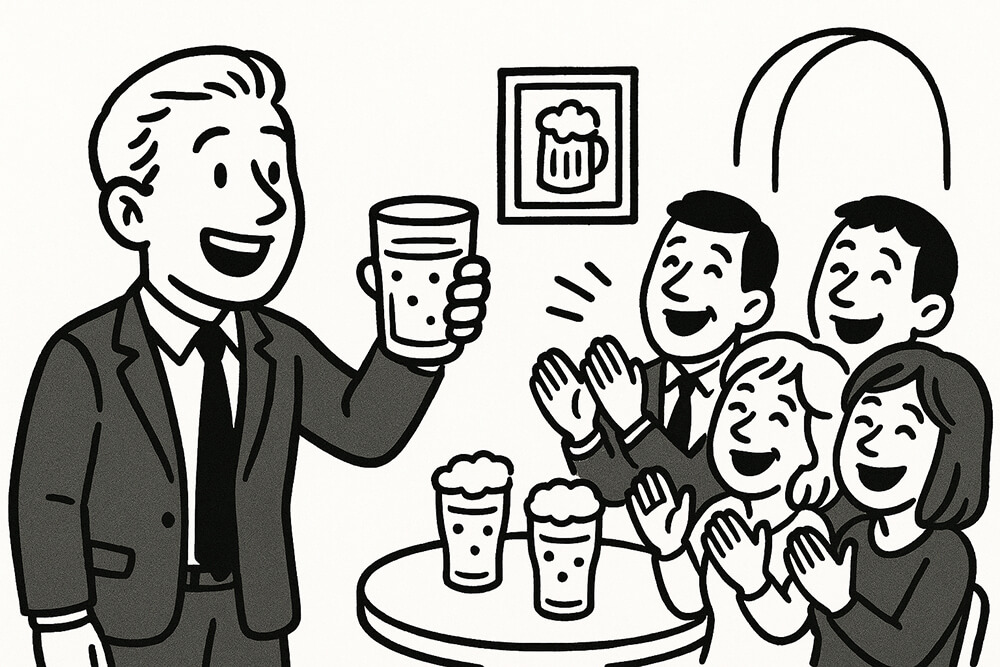
An American businessman was visiting London for the first time.
He wanted to impress his British colleagues with a sense of humor, so he decided to tell a classic English joke he had found online.
At lunch, he stood up confidently and said, “Why don’t scientists trust atoms?”
The British colleagues looked at him politely.
He delivered the punchline: “Because they make up everything!”
There was a moment of silence, then a few polite smiles.
Trying to recover, the American laughed loudly at his own joke.
One British colleague finally said, “Ah, yes, very clever. We heard that one… about ten years ago.”
Another added, “Still, it’s not quite our cup of tea.”
The American, confused, whispered to a younger colleague, “Cup of tea? But I didn’t mention tea in my joke.”
The younger colleague chuckled and explained, “It’s just a British expression meaning it’s not really their style.”
The businessman sighed.
He had studied English grammar for years, but he realized that mastering humor and cultural expressions was the real challenge.
Later that evening, he tried again at a pub.
This time, instead of telling a joke, he simply raised his glass and said, “Cheers!”
Everyone laughed—not because it was funny, but because finally, he sounded a little bit British.
あるアメリカ人ビジネスマンが初めてロンドンを訪れました。
彼はイギリス人同僚を笑わせたいと思い、ネットで見つけた古典的な英語ジョークを披露することにしました。
昼食の席で、自信満々に立ち上がり、こう言いました。
「なぜ科学者は原子を信用しないのでしょう?」
イギリス人たちは礼儀正しく彼を見つめます。
彼はオチを言いました。「だって原子はすべてをでっちあげるから!(make up everything)」
一瞬の沈黙のあと、数人がにこやかに微笑みました。
場を取り戻そうと、アメリカ人は自分で大声で笑いました。
すると一人のイギリス人同僚が言いました。「ああ、それは確かにうまい。でも、10年前から知っているジョークですね。」
別の同僚はこう付け加えました。「まあ、私たちの cup of tea ではないですが。」
アメリカ人は困惑して若い同僚にささやきました。「紅茶?僕はジョークで紅茶の話なんかしてないぞ。」
若い同僚はくすっと笑い、「イギリス英語で『自分の好みじゃない』って意味なんですよ」と説明しました。
アメリカ人はため息をつきました。
彼は何年も英語文法を勉強してきましたが、ユーモアと文化的な表現を理解することこそが真の挑戦だと気づいたのです。
その夜、パブでもう一度挑戦しました。
今度はジョークを言う代わりに、グラスを掲げて「Cheers!」とだけ言いました。
みんなが笑いました──それはジョークが面白かったからではなく、ようやく彼が少しブリティッシュに聞こえたからでした。
make up everything = 「全部でっちあげる」「構成している」 → 原子とユーモアをかけたダブルミーニング。
not my cup of tea = 「自分の好みじゃない」。イギリス英語でよく使う表現。
cheers! = 「乾杯!」だけでなく、イギリスでは「ありがとう」「じゃあね」の意味でも日常的に使う。
このジョークは「単なる英語のオチ」だけでなく、文化背景(イギリス流のユーモア・表現の違い)が含まれています。
英語上級者は、文法や単語よりも「その国の笑いの感覚」を理解することが課題になります。
会話の中でこうした表現に触れたら、「直訳せず文化ごと受け止める」意識を持つと、コミュニケーションが一段階深まります。